|
Z3
|

|
Loading...
Searching...
No Matches
|
Z3
|
|
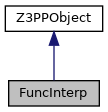
 Inheritance diagram for FuncInterp:
Public Member Functions | |
| __init__ (self, f, ctx) | |
| __del__ (self) | |
| else_value (self) | |
| num_entries (self) | |
| arity (self) | |
| entry (self, idx) | |
| translate (self, other_ctx) | |
| __copy__ (self) | |
| __deepcopy__ (self, memo={}) | |
| as_list (self) | |
| __repr__ (self) | |
| Public Member Functions inherited from Z3PPObject | |
| use_pp (self) | |
Data Fields | |
| f | |
| ctx | |
| model | |
Additional Inherited Members | |
| Protected Member Functions inherited from Z3PPObject | |
| _repr_html_ (self) | |
| __init__ | ( | self, | |
| f, | |||
| ctx | |||
| ) |
Definition at line 6870 of file z3py.py.
| __del__ | ( | self | ) |
Definition at line 6876 of file z3py.py.
| __copy__ | ( | self | ) |
| __deepcopy__ | ( | self, | |
memo = {} |
|||
| ) |
| __repr__ | ( | self | ) |
| arity | ( | self | ) |
Return the number of arguments for each entry in the function interpretation `self`.

>>> f = Function('f', IntSort(), IntSort())
>>> s = Solver()
>>> s.add(f(0) == 1, f(1) == 1, f(2) == 0)
>>> s.check()
sat
>>> m = s.model()
>>> m[f].arity()
1
Definition at line 6919 of file z3py.py.
| as_list | ( | self | ) |
Return the function interpretation as a Python list.
>>> f = Function('f', IntSort(), IntSort())
>>> s = Solver()
>>> s.add(f(0) == 1, f(1) == 1, f(2) == 0)
>>> s.check()
sat
>>> m = s.model()
>>> m[f]
[2 -> 0, else -> 1]
>>> m[f].as_list()
[[2, 0], 1]
Definition at line 6964 of file z3py.py.
Referenced by FuncEntry.__repr__(), and FuncInterp.as_list().
| else_value | ( | self | ) |
Return the `else` value for a function interpretation.
Return None if Z3 did not specify the `else` value for
this object.

>>> f = Function('f', IntSort(), IntSort())
>>> s = Solver()
>>> s.add(f(0) == 1, f(1) == 1, f(2) == 0)
>>> s.check()
sat
>>> m = s.model()
>>> m[f]
[2 -> 0, else -> 1]
>>> m[f].else_value()
1
Definition at line 6880 of file z3py.py.
Referenced by FuncInterp.as_list().
| entry | ( | self, | |
| idx | |||
| ) |
Return an entry at position `idx < self.num_entries()` in the function interpretation `self`.

>>> f = Function('f', IntSort(), IntSort())
>>> s = Solver()
>>> s.add(f(0) == 1, f(1) == 1, f(2) == 0)
>>> s.check()
sat
>>> m = s.model()
>>> m[f]
[2 -> 0, else -> 1]
>>> m[f].num_entries()
1
>>> m[f].entry(0)
[2, 0]
Definition at line 6933 of file z3py.py.
Referenced by FuncEntry.__deepcopy__(), FuncEntry.__del__(), FuncEntry.arg_value(), FuncInterp.as_list(), FuncEntry.num_args(), and FuncEntry.value().
| num_entries | ( | self | ) |
Return the number of entries/points in the function interpretation `self`.

>>> f = Function('f', IntSort(), IntSort())
>>> s = Solver()
>>> s.add(f(0) == 1, f(1) == 1, f(2) == 0)
>>> s.check()
sat
>>> m = s.model()
>>> m[f]
[2 -> 0, else -> 1]
>>> m[f].num_entries()
1
Definition at line 6903 of file z3py.py.
Referenced by FuncInterp.as_list(), and FuncInterp.entry().
| translate | ( | self, | |
| other_ctx | |||
| ) |
Copy model 'self' to context 'other_ctx'.
Definition at line 6953 of file z3py.py.
Referenced by AstRef.__copy__(), Goal.__copy__(), AstVector.__copy__(), FuncInterp.__copy__(), ModelRef.__copy__(), Goal.__deepcopy__(), AstVector.__deepcopy__(), FuncInterp.__deepcopy__(), and ModelRef.__deepcopy__().
| ctx |
Definition at line 6872 of file z3py.py.
Referenced by ArithRef.__add__(), BitVecRef.__add__(), BitVecRef.__and__(), FuncDeclRef.__call__(), AstMap.__contains__(), AstRef.__copy__(), Goal.__copy__(), AstVector.__copy__(), FuncInterp.__copy__(), ModelRef.__copy__(), AstRef.__deepcopy__(), Datatype.__deepcopy__(), ParamsRef.__deepcopy__(), ParamDescrsRef.__deepcopy__(), Goal.__deepcopy__(), AstVector.__deepcopy__(), AstMap.__deepcopy__(), FuncEntry.__deepcopy__(), FuncInterp.__deepcopy__(), ModelRef.__deepcopy__(), Statistics.__deepcopy__(), Context.__del__(), AstRef.__del__(), ScopedConstructor.__del__(), ScopedConstructorList.__del__(), ParamsRef.__del__(), ParamDescrsRef.__del__(), Goal.__del__(), AstVector.__del__(), AstMap.__del__(), FuncEntry.__del__(), FuncInterp.__del__(), ModelRef.__del__(), Statistics.__del__(), Solver.__del__(), ArithRef.__div__(), BitVecRef.__div__(), ExprRef.__eq__(), ArithRef.__ge__(), BitVecRef.__ge__(), AstVector.__getitem__(), ModelRef.__getitem__(), Statistics.__getitem__(), AstMap.__getitem__(), ArithRef.__gt__(), BitVecRef.__gt__(), BitVecRef.__invert__(), ArithRef.__le__(), BitVecRef.__le__(), AstVector.__len__(), AstMap.__len__(), ModelRef.__len__(), Statistics.__len__(), BitVecRef.__lshift__(), ArithRef.__lt__(), BitVecRef.__lt__(), ArithRef.__mod__(), BitVecRef.__mod__(), BoolRef.__mul__(), ArithRef.__mul__(), BitVecRef.__mul__(), ExprRef.__ne__(), ArithRef.__neg__(), BitVecRef.__neg__(), BitVecRef.__or__(), ArithRef.__pow__(), ArithRef.__radd__(), BitVecRef.__radd__(), BitVecRef.__rand__(), ArithRef.__rdiv__(), BitVecRef.__rdiv__(), ParamsRef.__repr__(), ParamDescrsRef.__repr__(), AstMap.__repr__(), Statistics.__repr__(), BitVecRef.__rlshift__(), ArithRef.__rmod__(), BitVecRef.__rmod__(), ArithRef.__rmul__(), BitVecRef.__rmul__(), BitVecRef.__ror__(), ArithRef.__rpow__(), BitVecRef.__rrshift__(), BitVecRef.__rshift__(), ArithRef.__rsub__(), BitVecRef.__rsub__(), BitVecRef.__rxor__(), AstVector.__setitem__(), AstMap.__setitem__(), ArithRef.__sub__(), BitVecRef.__sub__(), BitVecRef.__xor__(), DatatypeSortRef.accessor(), ExprRef.arg(), FuncEntry.arg_value(), FuncInterp.arity(), Goal.as_expr(), Solver.assert_and_track(), Goal.assert_exprs(), Solver.assert_exprs(), QuantifierRef.body(), FiniteSetSortRef.cast(), Solver.check(), Goal.convert_model(), AstRef.ctx_ref(), ExprRef.decl(), ModelRef.decls(), ArrayRef.default(), RatNumRef.denominator(), Goal.depth(), Goal.dimacs(), FuncDeclRef.domain(), ArraySortRef.domain_n(), FuncInterp.else_value(), FuncInterp.entry(), AstMap.erase(), ModelRef.eval(), Goal.get(), ParamDescrsRef.get_documentation(), ModelRef.get_interp(), Statistics.get_key_value(), ParamDescrsRef.get_kind(), ParamDescrsRef.get_name(), ModelRef.get_sort(), ModelRef.get_universe(), Goal.inconsistent(), AstMap.keys(), Statistics.keys(), Solver.model(), SortRef.name(), QuantifierRef.no_pattern(), FuncEntry.num_args(), FuncInterp.num_entries(), Solver.num_scopes(), ModelRef.num_sorts(), FuncDeclRef.params(), QuantifierRef.pattern(), AlgebraicNumRef.poly(), Solver.pop(), Goal.prec(), ModelRef.project(), ModelRef.project_with_witness(), Solver.push(), AstVector.push(), QuantifierRef.qid(), FuncDeclRef.range(), ArraySortRef.range(), DatatypeSortRef.recognizer(), Context.ref(), AstMap.reset(), Solver.reset(), AstVector.resize(), Solver.set(), ParamsRef.set(), Goal.sexpr(), AstVector.sexpr(), ModelRef.sexpr(), ParamDescrsRef.size(), Goal.size(), QuantifierRef.skolem_id(), AstVector.translate(), AstRef.translate(), Goal.translate(), ModelRef.translate(), ExprRef.update(), DatatypeRef.update_field(), ParamsRef.validate(), FuncEntry.value(), QuantifierRef.var_name(), and QuantifierRef.var_sort().
| f |
Definition at line 6871 of file z3py.py.
Referenced by FuncInterp.__del__(), FuncInterp.arity(), FuncInterp.else_value(), FuncInterp.entry(), and FuncInterp.num_entries().
| model |
Definition at line 6956 of file z3py.py.
Referenced by ModelRef.__del__(), ModelRef.__getitem__(), ModelRef.__len__(), ModelRef.decls(), ModelRef.eval(), ModelRef.get_interp(), ModelRef.get_sort(), ModelRef.get_universe(), ModelRef.num_sorts(), ModelRef.project(), ModelRef.project_with_witness(), ModelRef.sexpr(), ModelRef.translate(), and ModelRef.update_value().
 1.9.8
1.9.8